AI-generated content is everywhere.
And unfortunately, a lot of it looks like it.
You have probably seen the graphics. Perfectly smooth people with strangely perfect teeth. Hands with questionable anatomy. Signs containing letters from an alphabet no one recognizes. Products that do not quite exist. Buildings that could never actually be built. Everything is dramatic, glossy and somehow completely forgettable.
We have reached the age of AI-generated slop. But AI is not the problem.
Using AI without judgment is.
Artificial intelligence can be an incredibly powerful advertising tool. It can help businesses research audiences, develop ideas, analyze results, identify trends, refine messaging, create variations, organize campaigns and accomplish repetitive tasks faster.
What it cannot do is replace taste. It cannot replace experience. And it certainly cannot replace knowing your business, your customers and your community.
Fast Does Not Mean Good
One of AI’s biggest advantages is speed.
It is also one of its biggest traps. If a business can generate 30 graphics in five minutes, that does not automatically mean it now has 30 pieces of advertising. It may simply have 30 graphics.
There is a difference.
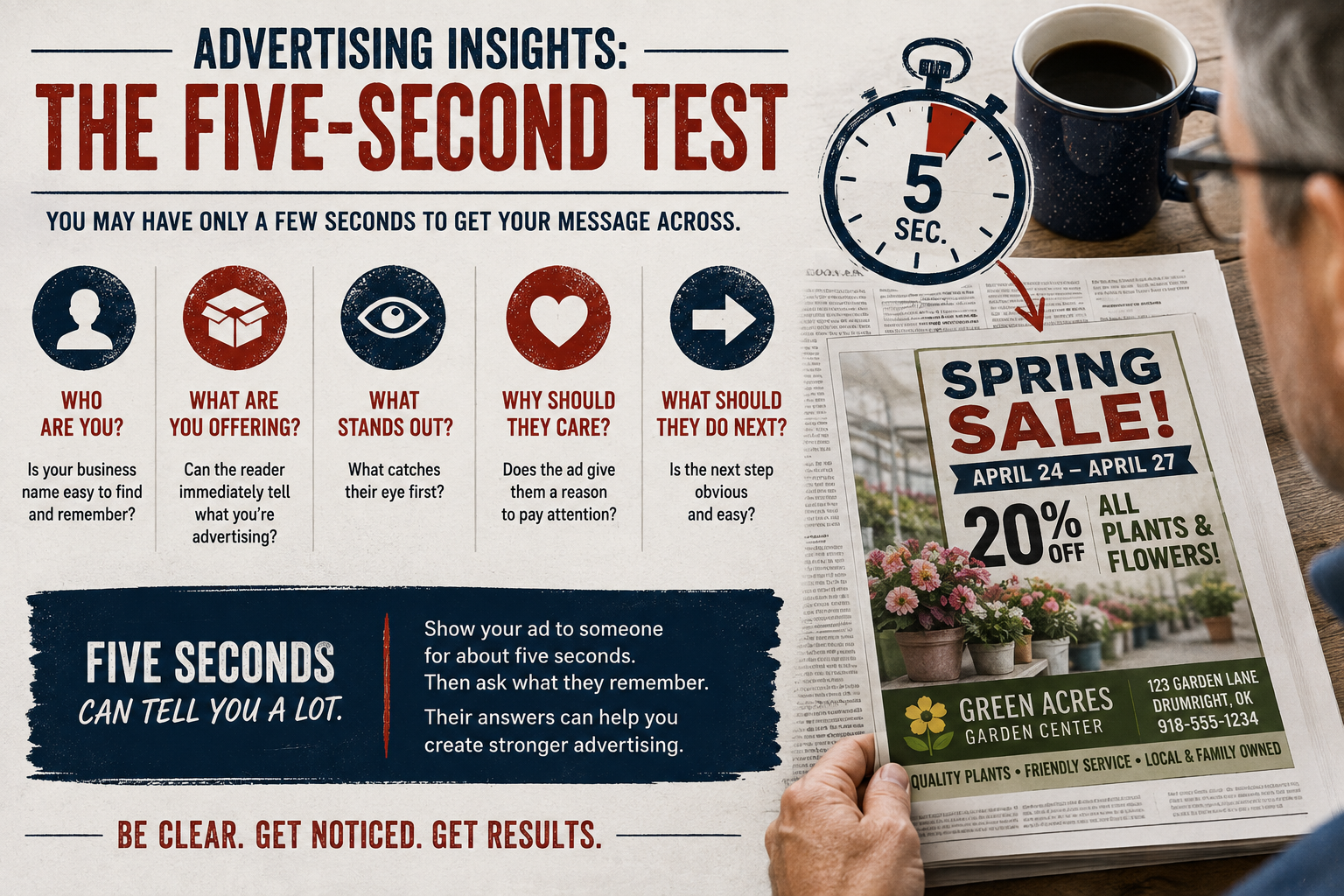
Advertising needs a purpose. What are you trying to communicate? Who needs to hear it? Why should they care? What should they remember? What should they do next?
Those questions still require thought. AI can help you answer them, but typing a prompt and accepting the first thing that appears on the screen is not a marketing strategy.
Your Customers Are Getting Better at Spotting It
Consumers are seeing more AI-generated content every day, and they are becoming increasingly familiar with the visual clues.
That matters. When an advertisement immediately looks artificial, generic or mass-produced, the customer may pay more attention to how it was made than to what the business was trying to say.
That is exactly the opposite of what good advertising should accomplish. The technology should support the message, not become the message.
AI should make your advertising smarter. It shouldn’t make your advertising look like AI.
The Best AI Work May Be the Part Nobody Sees
Some of the most valuable uses of AI in advertising happen long before the finished ad reaches the public.
AI can help analyze campaign performance. It can find patterns buried in data. It can compare messaging, organize research, develop campaign concepts, brainstorm headlines, identify customer questions and turn one strong idea into material for several different platforms.
It can help a small business accomplish work that once required considerably more time and resources. That is powerful. And your customer never has to know AI was involved. They simply see better advertising.
AI Still Needs a Human in the Room
Good advertising requires decisions. Someone still has to recognize when an image looks ridiculous. Someone still has to notice when the copy sounds like every other company in the industry.
Someone has to know that a photograph of the actual employee, actual customer, actual product or actual business will sometimes be infinitely more effective than the most technically impressive generated image.
And someone needs to be willing to say, “No. That’s not good enough.” That is where human experience matters. The goal should not be to prove that your business can use AI. The goal should be to use AI so effectively that your business becomes better at communicating with people.
Use the Tool. Keep the Judgment.
Every major technological shift in advertising has created shortcuts.
Desktop publishing made it easier to design advertisements. Digital cameras made photography easier. Social media made publishing easier. Smartphones made video production easier.
None of those things automatically made the advertising good.
AI is no different.
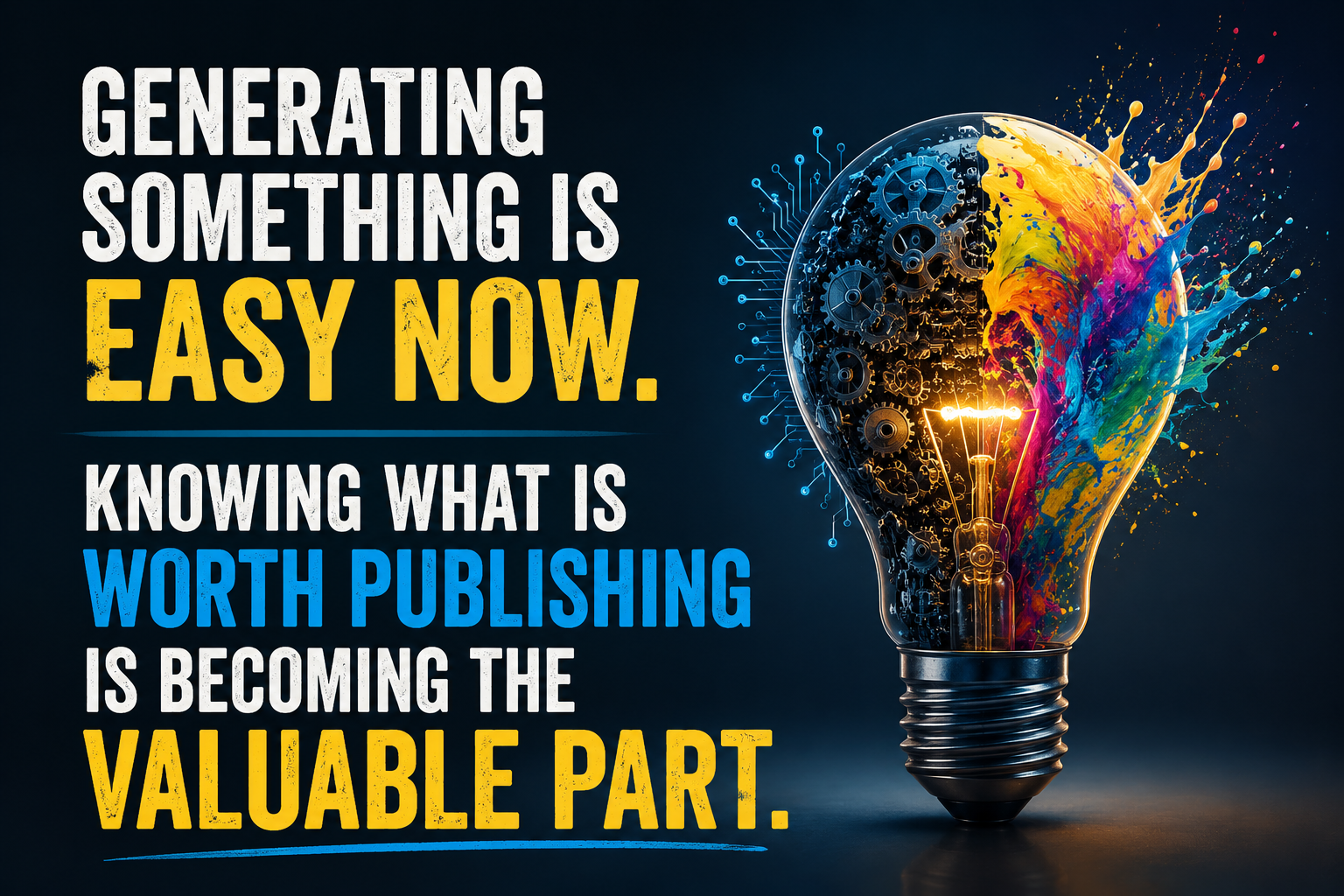
Businesses absolutely should be learning how to use it. Use it to think faster. Research deeper. Analyze more information. Explore more possibilities. Reduce repetitive work. Test ideas. Improve workflows. Then bring human judgment back into the process. Because generating something is easy now.
Knowing what is worth publishing is becoming the valuable part.

About The Author
For more than 30 years, Anesa K. Chastain Jones has helped businesses grow through strategic advertising, graphic design, branding, publishing, websites, and digital marketing. As General Manager and Graphics Director of Oklahoma's Choice Weekly, she combines decades of real-world experience with a passion for helping local businesses become more visible, build stronger brands, and connect with their communities. Through Advertising Insights, Anesa shares practical ideas, creative inspiration, and honest marketing advice that business owners can put to work immediately.