When someone looks at your advertisement, what do they notice first? What do they read next? Can they quickly tell what you offer and how to reach you?
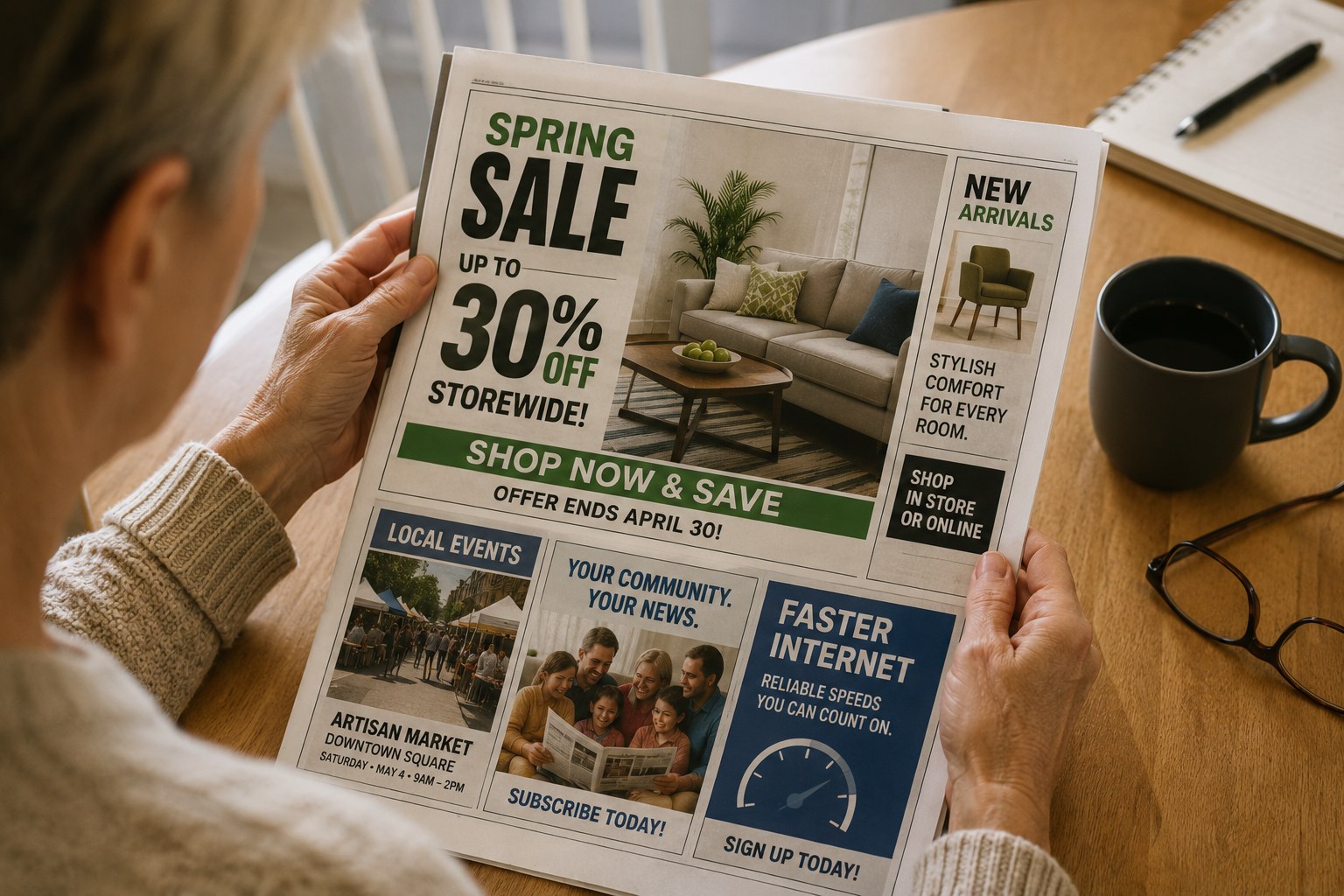
Those questions are at the heart of effective advertising design. An ad has to attract attention, then guide it somewhere useful. A striking image may earn a glance, but the design needs to carry that interest through to the product, the offer and the next step.
At Oklahoma’s Choice Weekly, our advertisements are built by a professional graphic designer with more than 30 years of experience. That experience shapes how every ad is organized, from the size of the headline to the placement of a photograph and the space around the contact information.
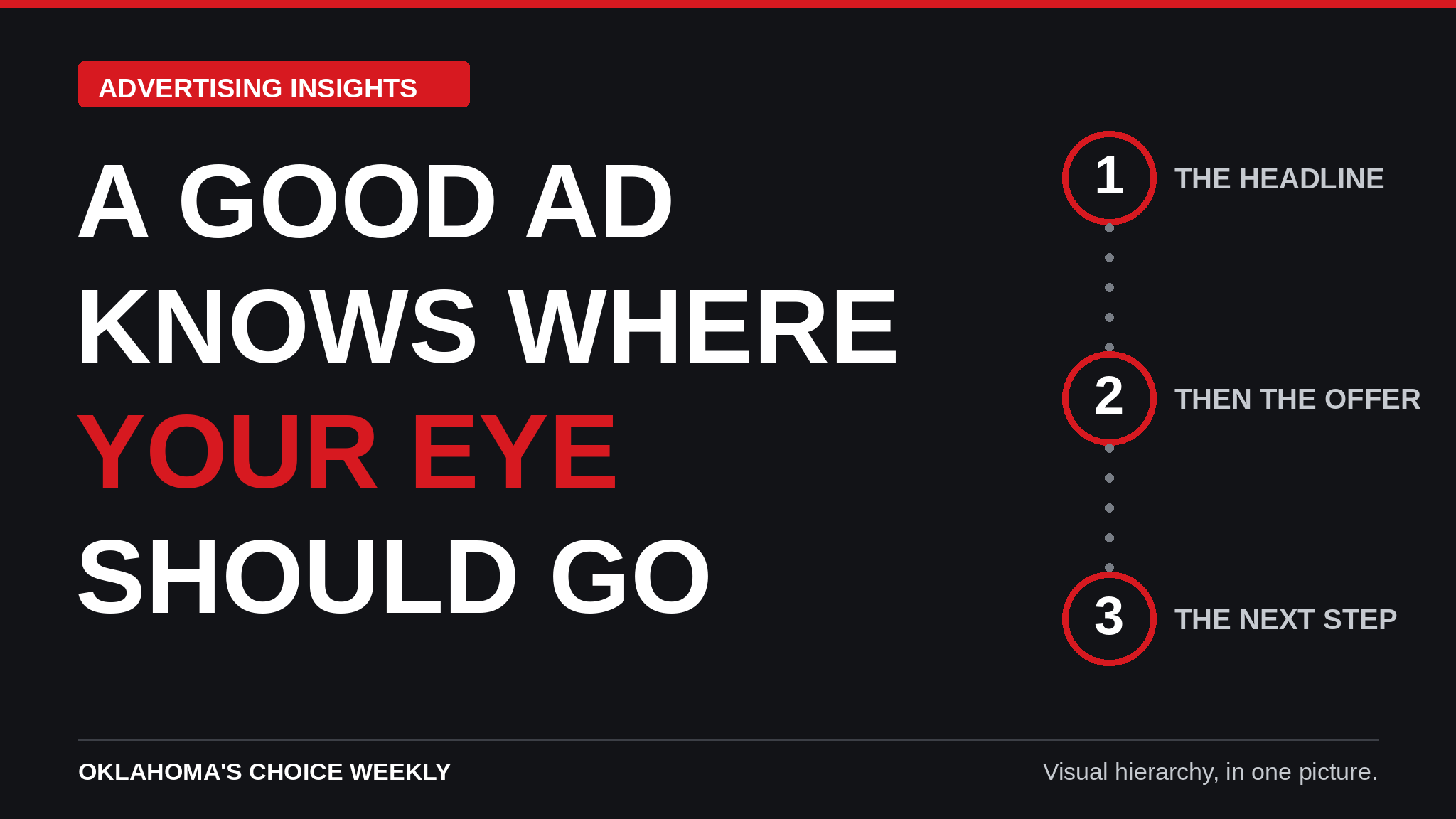
Designers call this visual hierarchy. In everyday terms, it means giving the eye a clear path through the advertisement.
A strong headline establishes the main message. A well-chosen image supports it. Supporting details answer the customer’s questions, and a clear call to action tells them what to do next. Size, contrast, color, spacing and placement all help establish that order.
When everything is large, bright, outlined or competing for attention, readers have to work harder to figure out what matters. An ad can be full of visual effects and still have very little direction. If the background is more memorable than the business or the offer gets lost among decorative details, the design needs work.
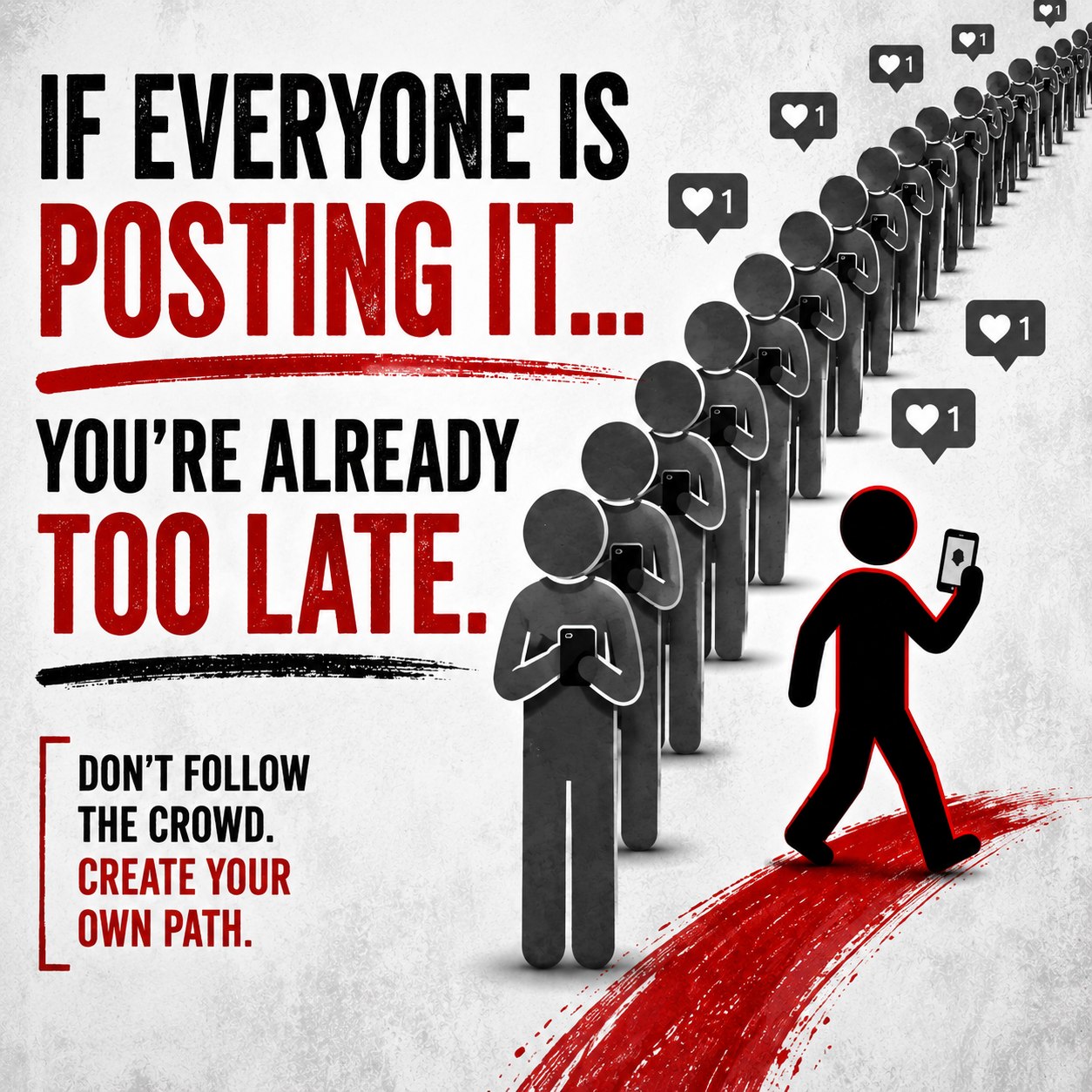
This is a weakness that can show up in AI-generated advertising. A tool may produce an elaborate image or an attractive arrangement without establishing the right priorities for the business. It can emphasize the most dramatic element while overlooking the information that would actually help someone become a customer.
That distinction matters. Catching someone’s eye is the beginning. Holding their attention long enough to communicate something useful is the job.
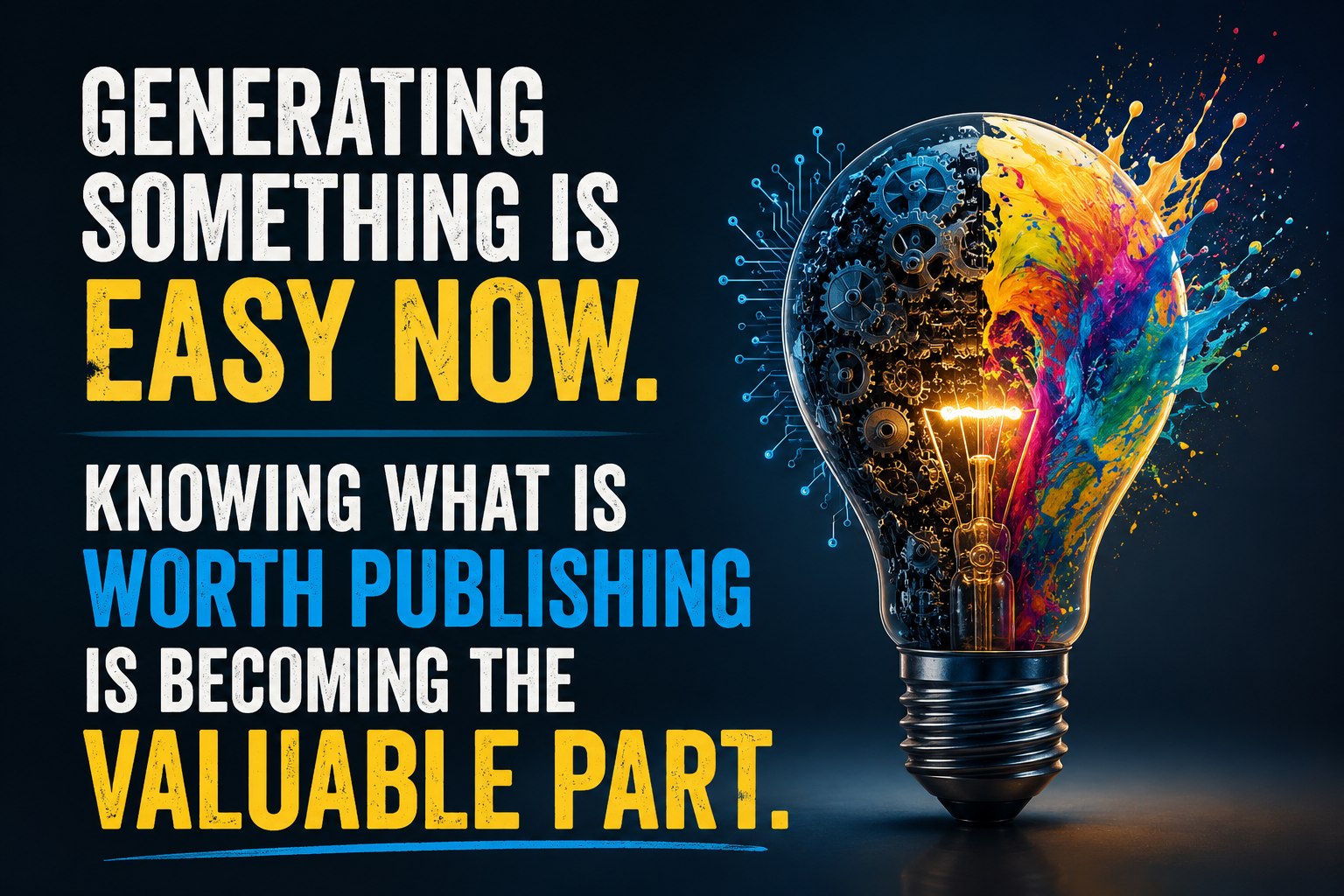
Artificial intelligence can help generate ideas, explore creative directions and produce elements that contribute to effective advertising. At OCW, it is one of the tools available to our designer. Our ads are built through professional design work, with decisions made about what belongs, what needs adjustment and what should be removed.
Sometimes an AI-generated idea is a useful starting point. Sometimes the advertiser’s original photograph and a straightforward headline are the strongest choice. Knowing which approach serves the business takes judgment.
That judgment also extends beyond the first impression. An ad that looks impressive on a large monitor may be difficult to read on a phone. A full-page layout cannot always be reduced into a smaller space without reworking it. Print artwork requires attention to resolution, color and reproduction. Each format brings its own demands.
Accuracy is part of the design process, too. Equipment needs to look like the equipment being sold. Products and services must be represented correctly. Names, prices, dates and contact information need careful review. Visual appeal has to be supported by reliable information.
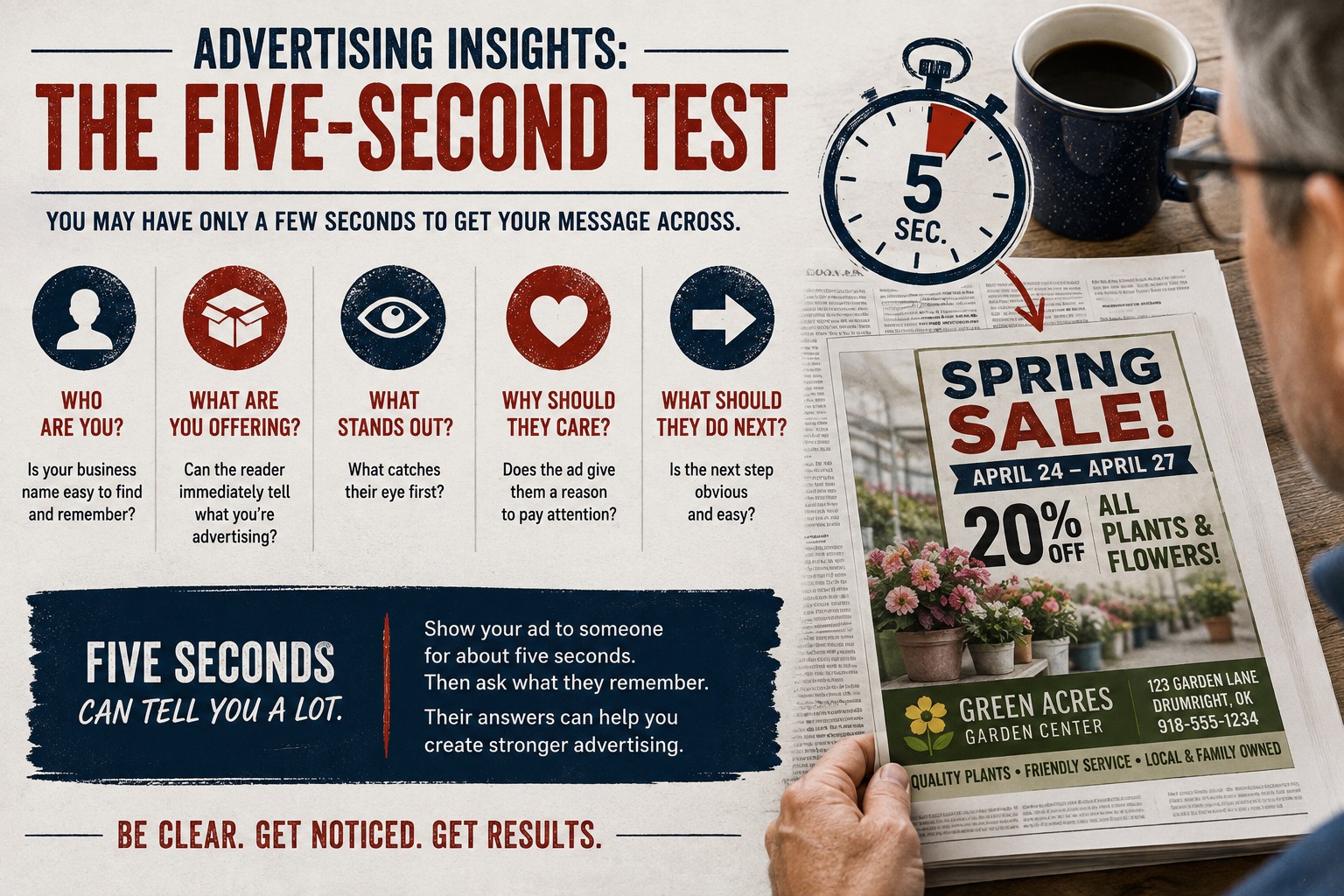
For advertisers, a useful way to evaluate an ad is to look away, then glance back at it. What stands out immediately? Is it the thing you most want customers to know? Can you find the next step without searching? If your eye keeps landing on decoration while missing the offer, there is a design problem to solve.
At Oklahoma’s Choice Weekly, we combine creative tools with more than 30 years of professional graphic design experience. The goal is to build advertisements that earn attention, communicate clearly and represent our advertisers well.
Your business deserves thoughtful design. Contact Oklahoma’s Choice Weekly and put an experienced eye to work on your next advertisement.
Oklahoma’s Choice Weekly
Anesa K. Chastain Jones, General Manager/Graphics Director
918-285-1314, graphics@oklahomaschoiceweekly.com

About The Author
For more than 30 years, Anesa K. Chastain Jones has helped businesses grow through strategic advertising, graphic design, branding, publishing, websites, and digital marketing. As General Manager and Graphics Director of Oklahoma's Choice Weekly, she combines decades of real-world experience with a passion for helping local businesses become more visible, build stronger brands, and connect with their communities. Through Advertising Insights, Anesa shares practical ideas, creative inspiration, and honest marketing advice that business owners can put to work immediately.